You have the project. You know you need RFID. Then the first big question hits: LF, HF/NFC, or UHF?
If you pick the wrong band, you get short read range, ghost reads, or tags that die in laundry or on metal racks. If you pick the right one, the system feels smooth and your client thinks “ok, this works”.
CXJ Smart Card runs its own RFID factory and we see this problem alot. So let’s walk through a simple, real-life way to pick the right RFID frequency, from door access all the way to full warehouse tracking.
RFID Frequency Basics: LF, HF/NFC and UHF
Before we talk doors and pallets, we need a quick map of the three main bands you use in real projects.
LF RFID 125–134 kHz for Animal ID and Tough Environments
Frequency: around 125 kHz or 134.2 kHz
Typical read range: a few centimeters
Good at: working near water and inside body tissue, less upset by metal
Typical usage:
Legacy access systems
Pet and livestock ID
Some low-speed industrial control
If you are tagging pets or livestock, classic glass tube transponders like the ones in RFID Animal Glass Tube Tag Pets Microchip run at this band. They sit under the skin for years and still read fine.
HF / NFC 13.56 MHz for Smart Cards and Phone Tap
Frequency: 13.56 MHz
Typical read range: from phone-tap distance up to maybe 30–50 cm with proper antennas
Good at: secure credentials, standards like ISO 14443/15693, NFC phones
Typical usage:
Staff ID and building access
Hotel key cards and campus cards
NFC tags for marketing, anti-counterfeit, small data
When people say “RFID card” in an office, they usually mean HF. Products like RFID Cards and NFC Tags cover this band, with chips such as MIFARE or NTAG already used by most controllers and NFC phones.
UHF 860–960 MHz for Long Range and Bulk Reading
Frequency: around 860–960 MHz, depending on region
Typical read range: 3–10+ meters with passive tags
Good at: reading many tags at once, long read window, fast logistics
Very stable near body and water; older access systems
Animal ID, some legacy access, special industrial
HF / NFC
13.56 MHz
A few cm to < 1 m
Good security; strong standards; works with phones
Smart cards, hotel keys, NFC stickers
UHF
860–960 MHz
3–10+ m
Long range; bulk reading; portal scenes
Warehousing, logistics, asset and vehicle tracking
Once you know this table, you already know 70% of frequency choice.
RFID Frequency for Access Control and Identity Projects
Access control is all about who is allowed to go where, and when. The radio field must stay tight and predictable. You dont want a door to open just because a badge is inside a backpack two meters away.
People Access: Doors, Turnstiles, Hotels
For doors and turnstiles, HF 13.56 MHz is usually the sweet spot:
Short, controlled read zone in front of the reader
Support for secure chips (DESFire and similar)
Multi-app cards: access, cashless payment, loyalty, all in one unit
You can give your users classic cards from RFID Cards, key tags from RFID Keyfobs, or even wearable credentials from RFID NFC Bracelets. Same backend, different form factor. This solves a lot of headache for HR, hotel front desks, gyms, water parks and so on.
LF still lives in some older “prox” systems. If the client already installed those readers on every door, you normally stick with LF chips inside your cards or fobs, and plan a slow migration to HF/NFC later. No need to rip everything today.
Vehicle Access: Gates and Parking
Vehicles are different. Nobody wants drivers to lean out of the window in the rain to tap a card.
For gates, yard access and barrier control, UHF is the normal choice:
Long read range so the driver just rolls to the barrier
Windshield or headlight labels stick on the vehicle for years
The system can log every entry and exit automatically
If the same user card should open both doors and gates, one practical trick is to use dual-frequency cards or bands: HF for doors, UHF for gates, all in one piece of plastic or silicone. CXJ’s OEM service can combine chips and handle the encoding, so you dont need to play with wires.
UHF RFID Frequency for Warehouse and Logistics Tracking
Now let’s move inside the warehouse. Here the big pain points sound like:
“We don’t see real stock in time.”
“Manual barcode scan is too slow.”
“Metal racks and liquids kill our read.”
This is where UHF really earns its keep.
Carton and Pallet Tracking in the Warehouse
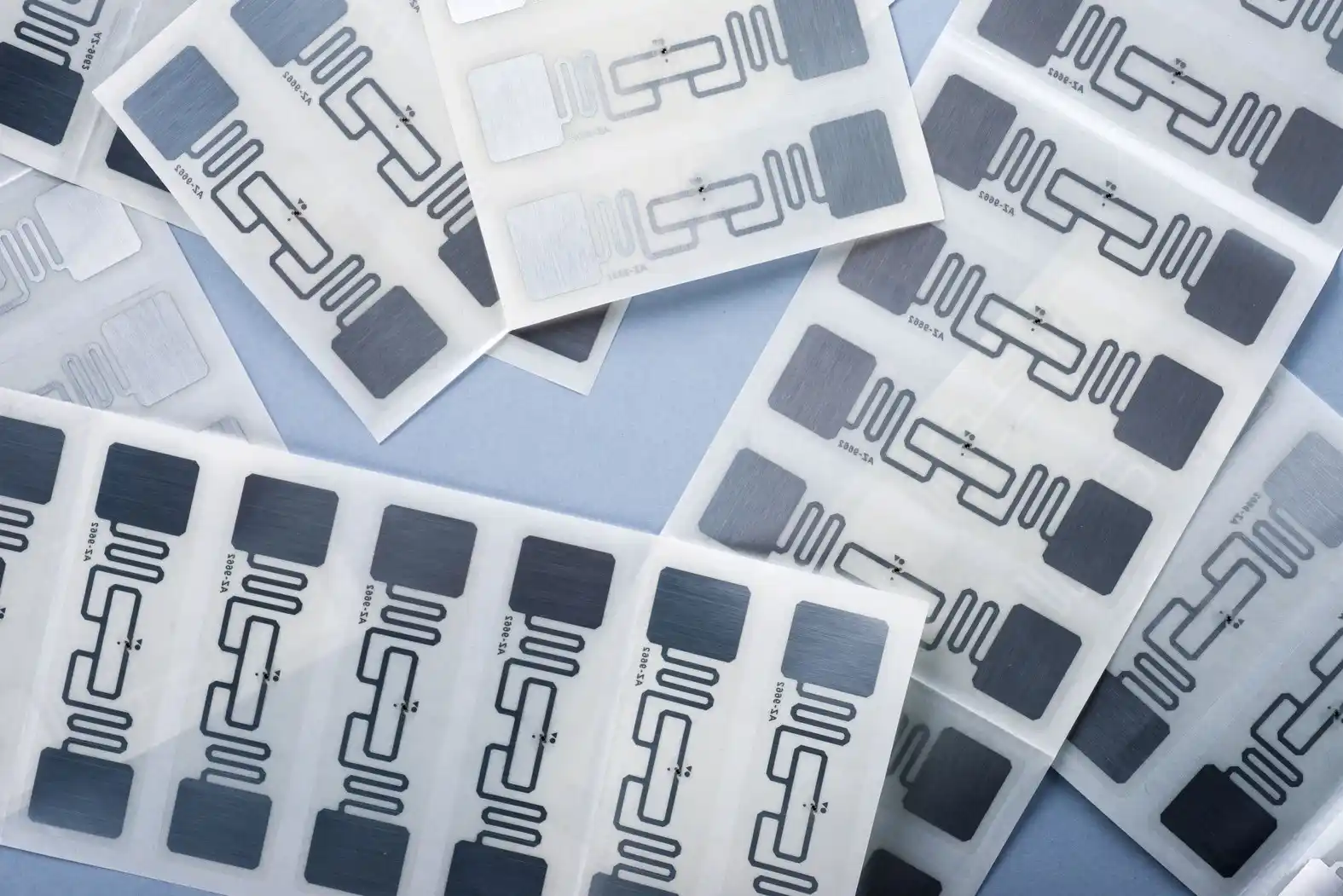
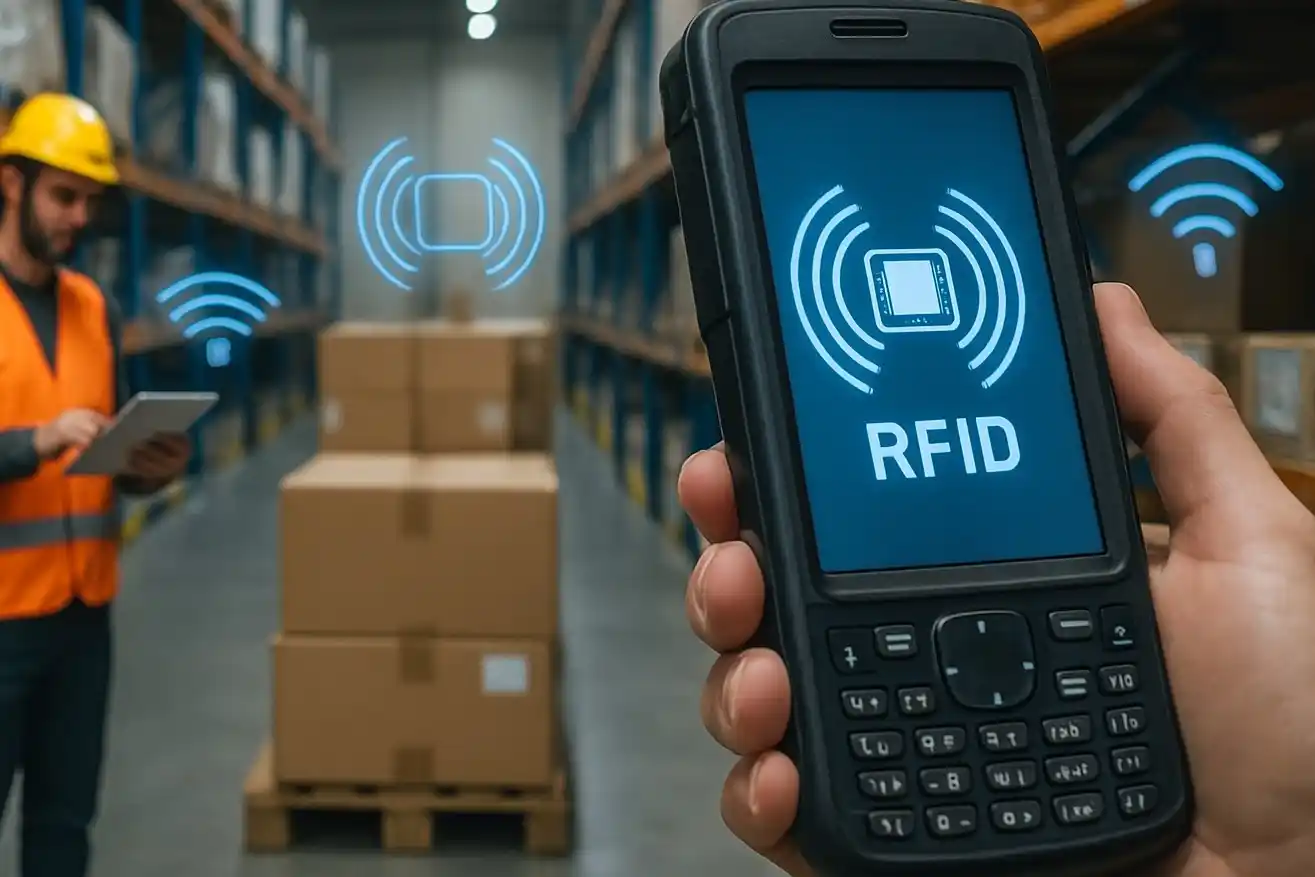
You mount fixed readers at dock doors or conveyor tunnels. When a pallet with UHF labels passes through, the system reads tens or hundreds of tags in one shot.
UHF label options include:
Paper or film labels and wet inlays from RFID Sticker Labels for cartons and pallets
Hang tags for apparel, so retail still sees a nice printed surface
You get automatic “in/out” events instead of hoping that staff scan each box.
Metal Rack, Tool and IT Asset Management
Standard labels on bare metal is asking for trouble. The field detunes, the read range drops, and items mysteriously disappear from inventory.
Here you switch to on-metal UHF tags, for example the hard ABS housings from Anti Metal ABS UHF RFID Tags. They keep the antenna tuned even on steel racks, cabinets, tools or servers. You can bolt them, rivet them, or glue them on. The reader sees them cleanly during each cycle count.
Textile and Laundry Workflows
Laundry and uniform tracking is pretty brutal. Tags see washing, drying, ironing, folding, sometimes even chemicals.
For this, you use UHF laundry tags and wash-care labels, designed to survive hundreds of cycles. CXJ offers woven and PPS laundry transponders plus discreet care labels in RFID Wash Care Labels. You sew or heat-seal them into garments and then use tunnel readers or sorters in the back-end.
The key here is: same UHF band, different packaging for textile vs. pallet vs. metal.
Practical RFID Frequency Selection Framework for Real Projects
Let’s put it all together in a short, no-nonsense framework you can reuse with your team or client.
Define the usage scene. Draw it on paper. Where is the reader? Where is the tag? Is there metal, water, bodies, glass, concrete? Is it moving fast or slow?
Pick a first-guess band.
Very short, controlled distance or phone tap → start with HF / NFC.
Long range, many tags at once → start with UHF.
Inside animals or very special harsh conditions → think LF.
Run a pilot with real hardware. Order small batch or free standard samples. Test in the real site: real door frames, real racks, real washing line. Look at read rate, blind spots, tag orientation. This step looks simple, but it save a lot of pain later.
Tune and then scale. After the pilot, maybe you move antennas, change power, adjust tag size or chip type. When you are happy, lock the spec and move to volume. CXJ’s flexible MOQ and multiple production lines help you go from sample to mass production without changing supplier mid-way.
Why Work With CXJ Smart Card for RFID Frequency Projects
RFID frequency choice is not only about MHz numbers. It is also about how fast you can move from idea to stable rollout.
CXJ Smart Card acts as a factory-direct custom RFID manufacturer:
In-house production for cards, tags, wristbands, inlays and special labels
OEM/ODM service from antenna design and chip selection to finished packaging
Encoding, printing and personalization done on the same site
ISO-led quality system with 100% outgoing inspection
RoHS / REACH compliant materials
Fast prototyping, flexible MOQ and global shipping so you can pilot quickly and scale confidently
So when you design your next access control or warehouse project, start from the usage, pick the right RFID frequency, then let the form factor and CXJ’s factory do the rest. The tech feels less magic and more like a normal, solid tool that just works.