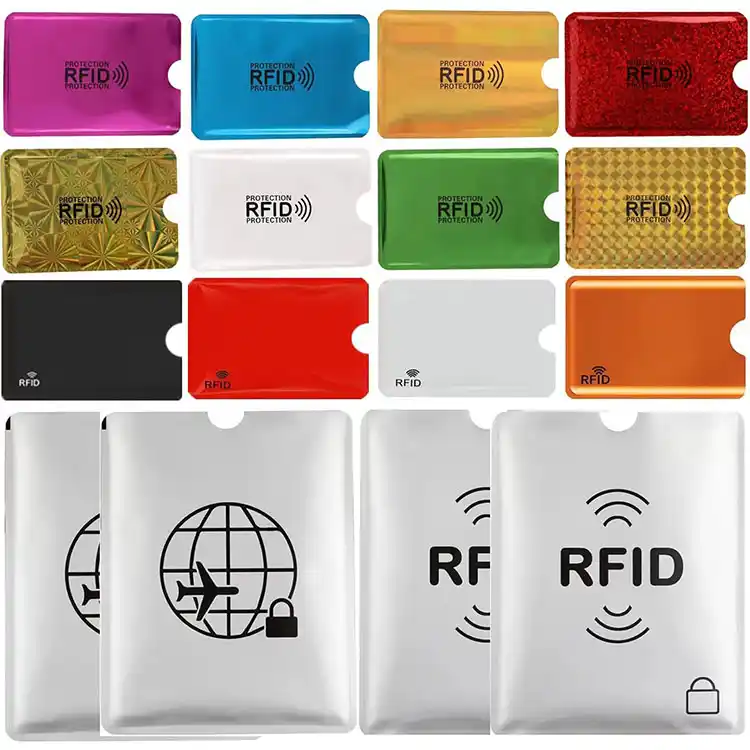
People hear “RFID” and instantly think: Someone can steal my card info just by walking past me. That fear isn’t totally crazy. But it’s also not the whole story.
Here’s my take: RFID blocking cards are useful, but only as part of a layered protection plan. If you sell anything that involves tap-to-pay, access badges, tickets, or membership cards, you can use blocking cards to reduce customer anxiety, cut support tickets, and look more professional—without overpromising.
And yes, we make the stuff that sits behind these programs: custom RFID and NFC products, plus OEM/ODM so you can pilot fast and scale clean.
The 10 Claims You Can Actually Defend
1) NFC read range is short
Most contactless reads happen at “tap distance,” not across a room. That’s why real-world “drive-by skimming” is harder than the internet makes it sound.
2) Modern contactless payments add multiple security layers
Contactless payment systems typically use dynamic data plus network checks, which makes simple replay attacks a pain.
3) “RFID skimming” is usually rare in real life
Risk isn’t zero, but it’s not an everyday epidemic. If you talk like it is, customers will smell the marketing and stop trusting you.
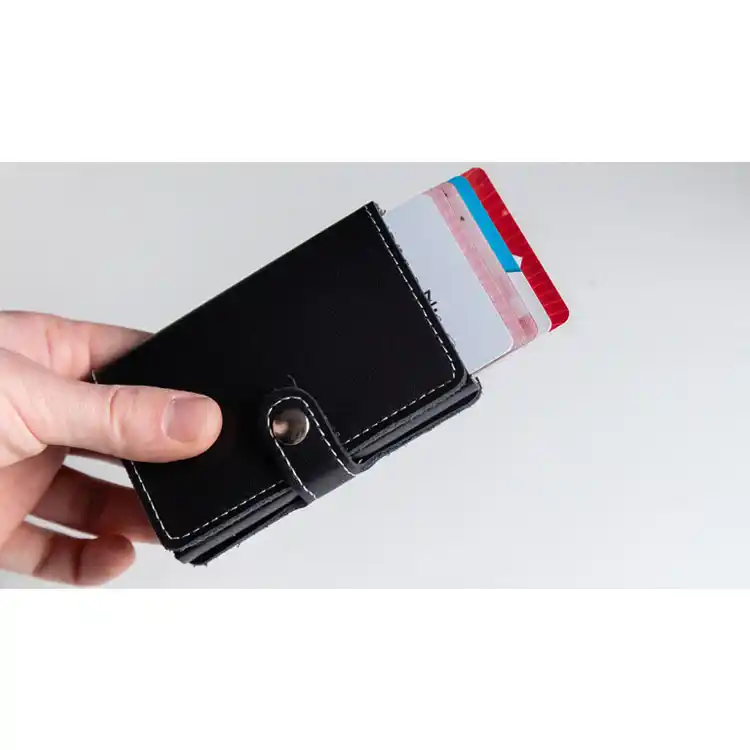
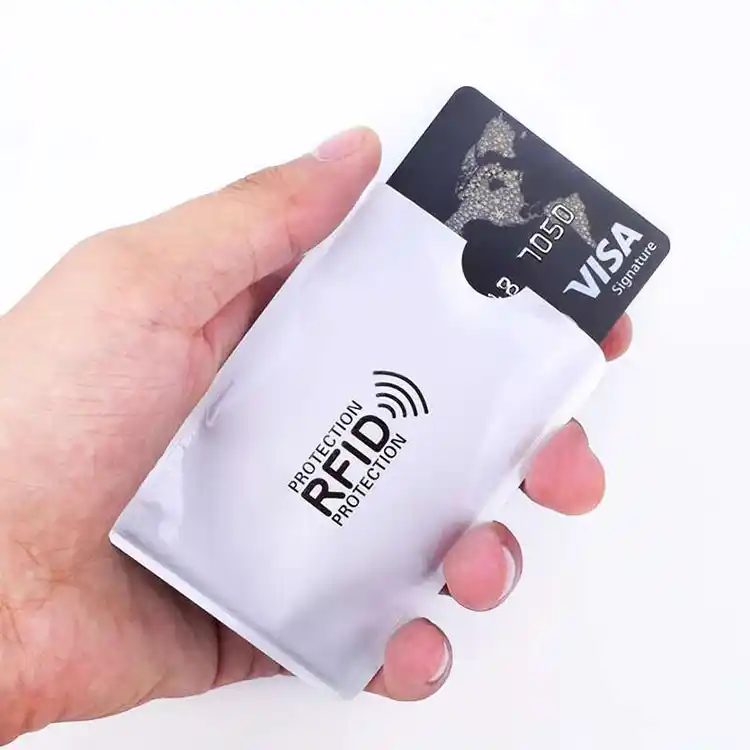
4) RFID blocking cards work by electromagnetic shielding
They act like a barrier that interrupts the reader field, so the chip can’t respond. Simple physics, not magic.
5) Results depend on frequency + product quality + how it sits in the wallet
A thin wallet, a thick wallet, card placement, and frequency all matter. Some setups block great. Some are… meh.
6) RFID blocking cards are passive, battery-free
They don’t need charging. Users just carry them.
7) Older access cards and legacy badges can be easier targets than bank cards
A lot of older credentials don’t have the same security model as modern payment rails. That’s where “extra shielding” can make more sense.
8) Businesses can turn blocking cards into a long-life branded touchpoint
It’s basically a “wallet resident” item. People keep it because it’s useful, not because it’s cute.
9) Some designs can be annoying with chip-insert use
Depending on the format, users may need to slide cards out for certain readers. If you don’t warn them, you’ll get complaints.
10) Terminal + process controls beat gadgets
If your POS, staff workflow, and device handling are sloppy, no giveaway card can save you.
Evidence Table: Claims, Business Meaning, and Source Type
Claim
What it means for your business
What you should do
Source type (no outbound links)
Short NFC range
Fear is often bigger than the real threat
Educate customers with clear language
Industry contactless standards (general)
Dynamic data exists
Copy-and-spend is not “easy mode”
Position blocking as extra comfort layer
Industry payment security guidance (general)
Skimming often uncommon
Don’t do scare marketing
Use calm, factual messaging
Consumer security commentary (general)
Shielding principle
Blocking is real physics
Explain it with a simple diagram
RF basics (general)
Frequency & placement matter
Some users will say “it didn’t work”
Test with real wallets + your cards
Field testing / QA practice
Passive card
Low friction for end users
Add to welcome kit or membership pack
Product design basics
Legacy badges risk
Non-payment credentials can be softer
Offer shielding for badge-heavy users
Access control ops (general)
Branding value
Long-term brand exposure
Print logo + help text + QR landing page
Retention/brand ops (general)
Insert-reader friction
UX problems create churn
Provide “how to carry it” guidance
CX support learnings
Process matters most
Big risk is often operational
Train staff, audit devices, monitor
Retail ops / fraud ops
How RFID Blocking Cards Actually Work
An RFID/NFC reader sends out an electromagnetic field. Your card’s chip harvests tiny energy from that field, then answers back with data.
A blocking card interrupts that conversation. It uses conductive layers (or tuned materials) to absorb/deflect the field so the chip behind it can’t “wake up.” That’s it. No batteries, no apps, no drama.
Where it gets tricky is frequency.
NFC/HF usually sits around 13.56 MHz, common in tap interactions and many badges.
UHF lives around 860–960 MHz, common in long-range inventory and logistics.
That’s why you shouldn’t assume “one blocker blocks everything forever.” It depends. Real life always has edge cases.
Business Use Cases: Customer Protection That Feels Real
Let’s talk practical stuff. Not theory.
Retail membership and loyalty programs
If you issue membership cards, customers carry them next to bank cards. A blocking card can reduce “what if” anxiety at checkout lines and crowded malls.
Bonus move: print a short message on the card like “Carry this in front of contactless cards.” Keep it plain. People actually read plain.
Hotels, events, and ticketing
Crowded venues create two problems: lost credentials and angry lines. A blocking card in the welcome pack can calm guests, and it signals you care about privacy.
Also, if you’re using wristbands or badges, blocking cards can protect the guest’s personal wallet while your credential handles access.
Coworking and shared offices
Coworking operators hate two things: tailgating and “my fob doesn’t work” tickets. Use a clean credential system, then offer a blocking card as a customer comfort add-on (especially for members who carry multiple badges daily).
Healthcare and clinics
Patients worry about identity and data. Even when the actual risk is low, the perceived risk drives complaints. A simple physical product can reduce that noise.
Logistics and warehousing
Here it flips: you might not need blocking for payments. But you do need strong RFID performance on assets, metal racks, and portals. If you’re doing UHF in harsh environments, on-metal tag design matters more than any blocker.
CXJ Smart Card Product Categories That Plug Into These Scenarios
If you’re building a protection program, you usually need more than one SKU. Here are the categories that map well to real deployments:
Custom access and ID credentials:RFID Cards for access, membership, ticketing, and UID programming.
Phone-tap and smart experiences:NFC Tags (labels, stickers, inlays, on-metal options) with common NTAG chip choices and multiple materials.
Daily carry credentials:RFID Keyfobs for doors, attendance, and shared-space access flows.
System integration parts:RFID/NFC Inlay for converters, label makers, and automated roll workflows.
Textile tracking:RFID Laundry Tags for hotels, uniforms, rental textiles—built for harsh handling and repeat cycles.
Garment identity + inventory:RFID Wash Care Labels that embed UHF chips into woven care labels for apparel tracking and brand control.
And if you need OEM/ODM (antenna, chip, material, printing, encoding, packaging) as one pipeline, that’s exactly how we run projects—prototype first, then scale without chaos.
OEM/ODM, Encoding, and “Don’t Break the System”
This is where buyers mess up.
They order “cards.” Then they realize they needed:
UID/EPC mapping that matches their database
NDEF for NFC phone taps
Variable printing and serialization
Verification reports so ops team stops arguing
If you skip this planning, you’ll spend weeks fixing dumb mistakes. And yeah, it happens a lot.
At CXJ Smart Card, we build around one idea: pilot quickly, scale confidently—with in-house production lines, ISO-led QC, and outgoing inspection so your rollout doesn’t turn into endless rework.
A Simple Rollout Plan (Pilot → Scale)
Pick your threat model (payments, badges, both). Don’t guess.
Choose frequency + form factor (HF/NFC vs UHF, card vs label vs fob).
Run wallet tests with real people. Some wallets block better than others, thats normal.
Write a one-paragraph user guide. Keep it human. “Put this card in front.”
Launch a small batch, watch support tickets, then scale.
CXJ can support that flow with fast sampling, flexible MOQ, encoding/personalization, and global shipping—so you’re not stuck waiting forever just to test an idea.