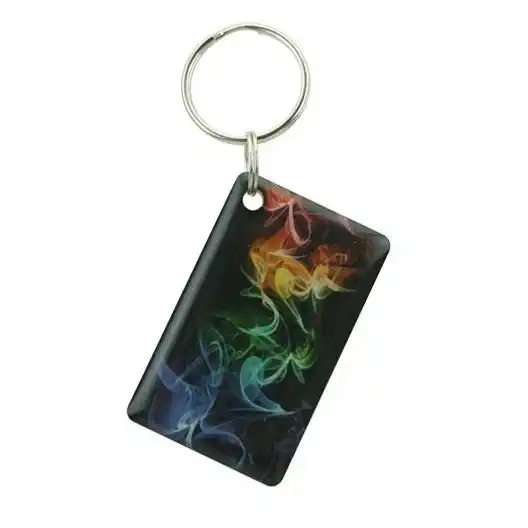
If you’ve ever rolled out RFID keyfobs, you already know the truth: the chip usually isn’t the problem. The housing is. People drop it, scratch it, soak it, toss it in a bag with keys, then blame “RFID quality” when reads get flaky.
So let’s talk housings the way buyers actually decide: what survives real life, what looks good on a keyring, and what keeps your badge-in rate from turning into a support ticket storm.
Quick note: We’re CXJ Smart Card (factory-direct OEM/ODM). We build RFID products end-to-end, from antenna + chip selection to printing and encoding. If you want to see how our lineup fits together beyond keyfobs, start at our homepage: Custom RFID Manufacturer | OEM/ODM Cards, Tags & Wristbands.
RFID Keyfob Housing Materials
Most buyers compare “ABS vs epoxy vs leather” like it’s a fashion choice. It’s not. It’s closer to picking shoes: wear the wrong one, you suffer.
Here’s the core idea:
ABS = the workhorse for daily access and rough handling
Epoxy = extra surface protection + glossy branding
Leather = premium feel + brand image
PVC / Silicone = flexible options when comfort or waterproofing matters
Wood / Metal = niche branding or high-end vibes, but you must spec it carefully
And yes, different frequencies behave different too. An LF keyfob often reads super close, while UHF keyfobs can read from much farther away. That changes how you design the whole “tap” behavior.
If you want a quick look at mainstream keyfob types, this product category page is a good baseline: RFID Keyfobs.
ABS RFID Keyfob Housing
ABS is the “no drama” option. It’s tough, it handles drops, and it doesn’t mind getting knocked around in pockets and key trays.
What ABS does well
Survives impact + abrasion better than most “pretty” housings
Works for laser marking, serials, UID, and logo printing
Bad QC = inconsistent fit, which can lead to internal movement (long term reads get weird)
Real example: for an HF/NFC ABS keyfob (NTAG213), a typical tap range is short (think phone-style “touch it”), and the housing is waterproof ABS. You can see a spec-style layout here: NTAG213 NFC ABS Keyfob – 13.56 MHz, Waterproof.
Epoxy RFID Keyfob Housing
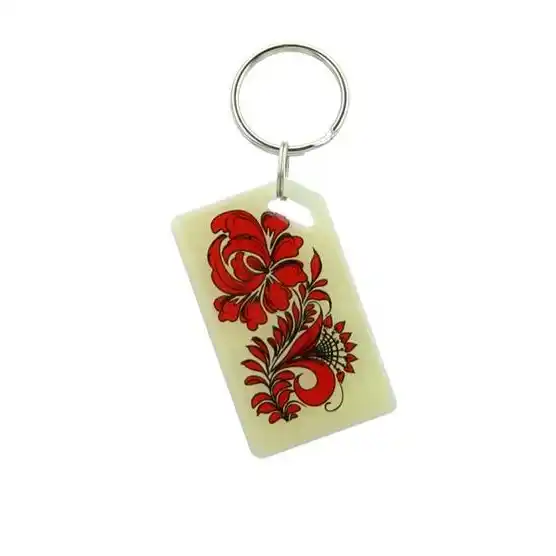
Epoxy isn’t magic. It’s basically a protective “cap” that helps the surface resist scratches and adds a glossy look. Buyers love it for branding, and honestly, it does look nice.
What epoxy does well
Better surface scratch resistance (keys are brutal)
Great for full-color logos and a “finished” feel
Helps in wet scenes (but water resistance still depends on the whole build)
Where epoxy can go wrong
It can look cloudy or bubble if the process is sloppy
Edges can chip if the fob takes repeated corner impacts
Some buyers over-spec epoxy when ABS would’ve been fine (then complain about lead time… yeah)
If you’re doing a membership rollout and you care about “people actually want to carry it,” epoxy makes sense. If it’s a factory gate keyfob, epoxy might be extra.
Leather RFID Keyfob Housing
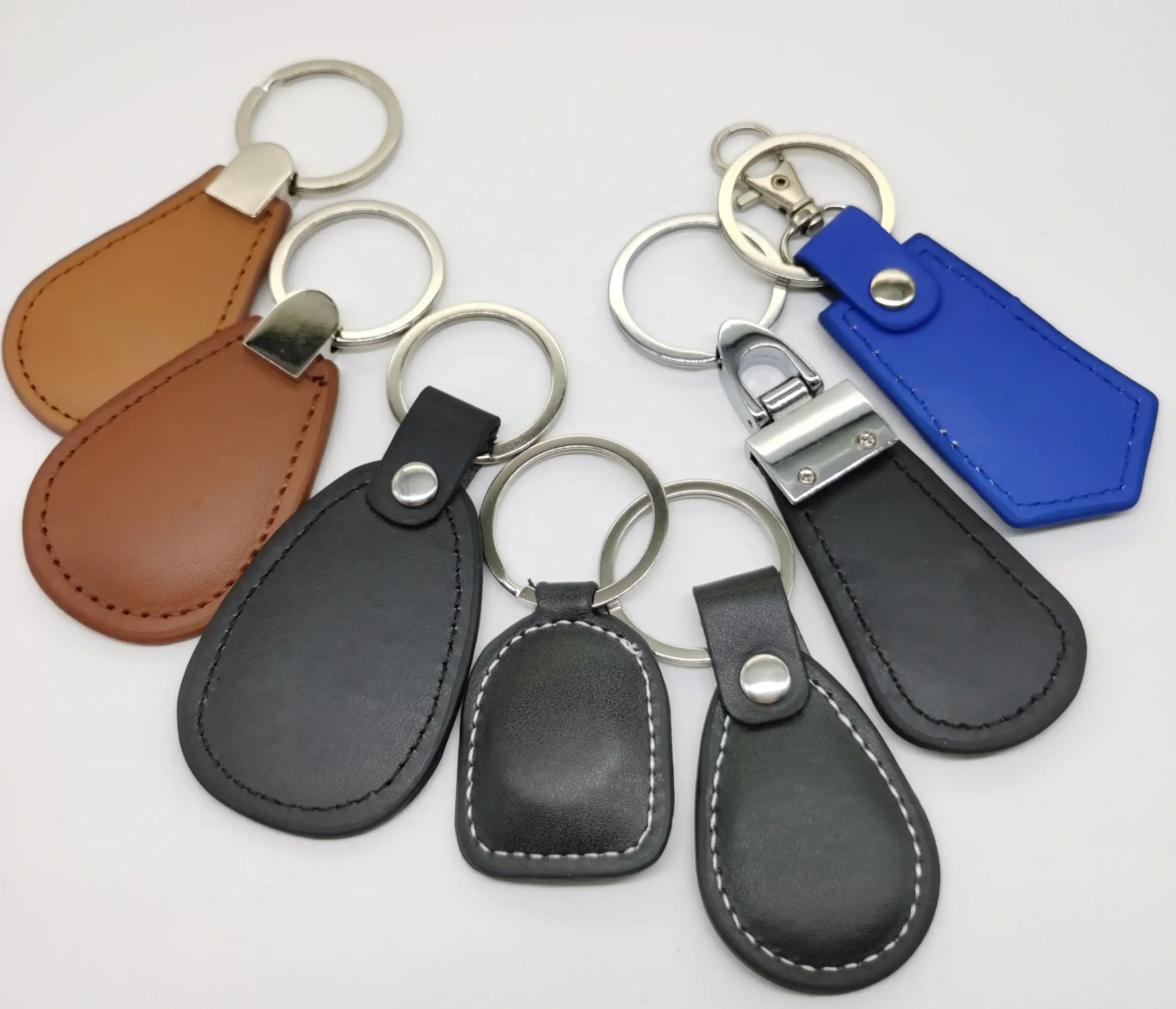
Leather is about brand perception. Hotels, clubs, premium gyms, car dealers, VIP lounges — these folks don’t want a plastic keychain vibe.
What leather does well
Feels premium in hand, less “cheap plastic” energy
Looks strong with embossing or clean logo stamping
Fits brands that care about packaging and unboxing
Where leather can go wrong
If it gets soaked often, it ages fast (and not always in a cool way)
Stitching quality matters a lot. Bad stitching = returns
The RFID module inside still needs solid encapsulation, leather alone won’t protect it
Leather is for image. ABS is for survival. Pick based on your users, not your mood.
PVC RFID Keyfob Housing
PVC housings show up a lot in access control. They’re simple, easy to print, and they can be made thin.
What PVC does well
Good print results, easy to brand
Lightweight and easy to carry
Works well for basic deployments
Where PVC can go wrong
It’s not always the best for heavy abuse
Can deform in hot cars or harsh heat if you spec it wrong
Silicone RFID Keyfob Housing
Silicone is your friend when comfort and water resistance matter.
What silicone does well
Feels soft, grips well, doesn’t slip
Handles water well, good for pools and wet zones
Hard to crack from impact
Where silicone can go wrong
Printing can be trickier than hard plastics
Dirt can stick to some silicone surfaces (depends on finish)
Silicone is popular when users wear it (wristbands) or handle it around water. If you’re also sourcing wristbands, this category is relevant: RFID NFC Bracelets.
UHF RFID Keyfob Housing
Not everyone needs UHF in a keyfob, but when you do, you really do. Think asset access, logistics sign-in, or longer-range workflows where a “tap” slows people down.
A UHF keyfob can read from meters away depending on reader setup and the environment. This is a different beast from NFC. Example product style here: UHF RFID Keychain Key Fob (ABS, 3–10 m).
Also, UHF housings often talk about IP ratings and long service life. That’s normal in industrial scenes.
Comparing RFID Keyfob Housings
Here’s a practical comparison table. It’s not perfect science, but it matches what most integrators see in the field.
Housing material
Durability (drops/keys)
Water exposure
Branding look
Best-fit scenarios
Common buyer complaint
ABS
High
Medium–High
Clean, simple
offices, property, attendance
“why did the ring area crack?”
Epoxy
Medium–High
High (surface)
Glossy, premium
membership, promo, hospitality
“scratched edges / chipping”
Leather
Medium
Medium
Very premium
hotels, VIP, clubs
“stitching failed / got ugly fast”
PVC
Medium
Medium
Easy printing
basic access, giveaways
“bent in heat / feels cheap”
Silicone
High (impact)
High
Casual
pools, gyms, wet areas
“printing wears / picks up dirt”
Wood
Medium
Low–Medium
Stylish
boutique branding
“water stains / wear marks”
Metal
High
High
Luxury
high-end gifts
“signal detune if design is bad”
Tiny but important: metal can mess with RF if the design isn’t engineered right. If someone sells you “metal keyfob” with no RF design story, be careful.
How to Choose RFID Keyfob Housing for Access Control
Try this simple decision flow. It saves a lot of back-and-forth.
LF: usually very close read (classic access control vibe)
UHF: can be hands-free-ish, but only if the reader setup is right
3) Don’t forget data handling
This is where projects quietly die. You need:
UID / NDEF / EPC mapping
key loading if your system needs it
verification report (so you don’t debug ghosts later)
If you also buy cards or need the same credential across formats, you’ll probably pair keyfobs with RFID Cards or even NFC Tags for posters, assets, or smart labels.
OEM/ODM RFID Keyfobs and Related Product Categories
A lot of buyers don’t just want “a keyfob.” They want a rollout kit:
keyfobs for daily users
cards for staff or backup credentials
tags/labels for assets
inlays for converting lines and automation
If that’s your world, you’ll care about antenna tuning, chip sourcing, print + encoding on one line, and QC that catches issues before shipment.
That’s the lane we sit in at CXJ Smart Card: OEM/ODM from antenna to finished product, ISO-led QC, and bulk-ready production. If you convert or print labels yourself, this helps too: RFID NFC Inlay.
And yeah — we can do samples and test reports for your pilot, then scale up when it passes real-world abuse. No drama.