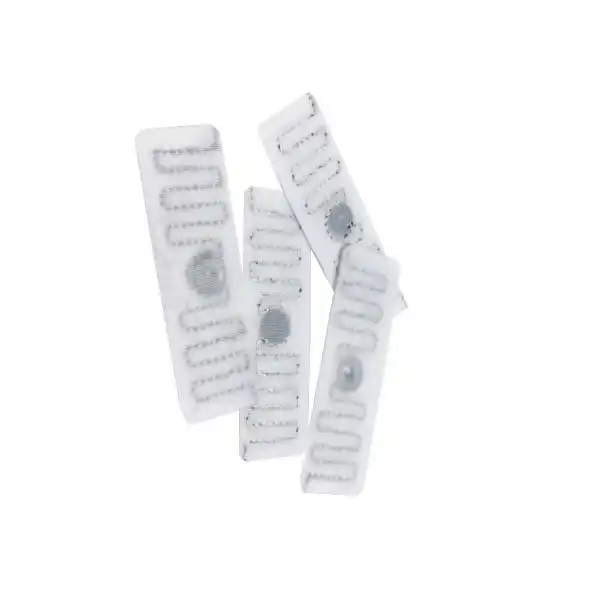
If you’ve ever run a hotel laundry room (or managed one from a distance), you know the weird truth: towels grow legs. Scrubs vanish. “We sent 300 pillowcases” turns into “we got 260 back” and everybody swears they’re right.
RFID laundry tags exist for this exact chaos. They don’t magically stop loss, but they turn guessing into records—so you can find where stuff got stuck, who had it last, and how fast your linen cycle really moves. RFID Journal even notes linen losses can hit ~15–20% of a hotel’s linen costs at high-end sites.
Below, I’ll walk you through what RFID laundry tags are, where they fit in real workflows (hotels, hospitals, and commercial laundries), and how to pick the right tag type using our product lines at CXJ Smart Card.
RFID Laundry Tags
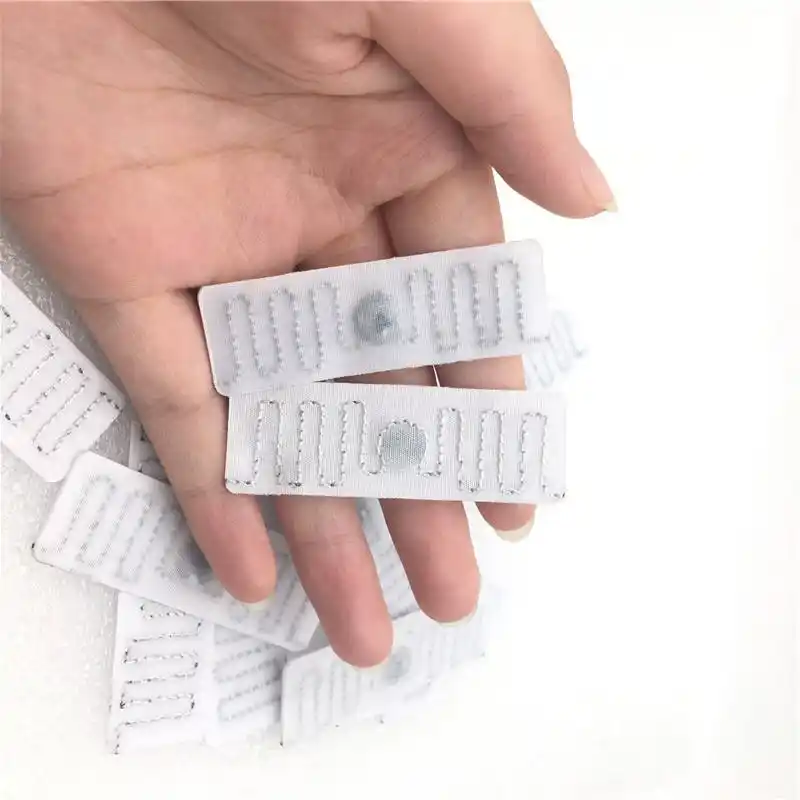
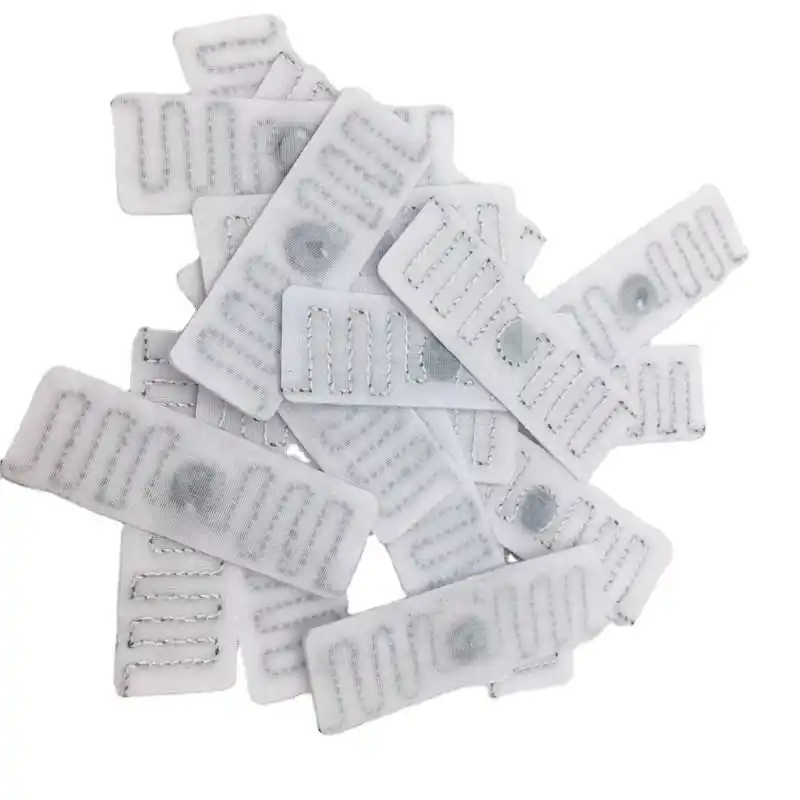
RFID laundry tags are washable RFID transponders you sew in, heat-seal, or embed into textiles like sheets, towels, robes, uniforms, and patient gowns. Your readers can scan them without line-of-sight, so you don’t have to unfold, count, and scan one-by-one. RFID deployments usually read tags at process chokepoints (portals, chutes, tunnels, cabinets, dock doors) to update item status automatically.
Hotels don’t “lose” linen in one big dramatic moment. It leaks out in tiny ways: pool towels, housekeeping carts, guest takeaways, vendor mix-ups, and plain old mis-sorts. RFID Journal reports losses around 15–20% can happen in premium hospitality.
When you tag items and read them at exits / docks / laundry chokepoints, you can:
spot the exact point where losses spike (pool? spa? a specific dock door?)
run faster cycle counts (no more “we think we have enough par”)
cut panic re-orders because you finally see real inventory
RFID Journal also describes reported outcomes like loss reduction ~50% (in some deployments) and labor reduction up to ~30% once teams stop doing endless manual counts.
Housekeeping flow and guest experience
Here’s the practical part: RFID isn’t only about “stop theft.” It’s about keeping rooms ready.
Picture Sunday checkout. You need clean sheets now. If your linen is stuck in a “black hole” between soiled pickup and clean storage, rooms sit idle. With RFID reads at laundry ingress/egress and storage areas, ops can answer:
“How many kings sets are clean right now?”
“What’s the turnaround time today?”
“Which batch missed sorting?”
RFID Uniform Tracking for Hospitals
Hospitals care about availability + infection control, not just stock. And OR scrubs are a classic pain point: wrong sizes disappear, staff hoard “just in case,” and distribution gets messy.
RFID Journal covered a hospital case where RFID helped track and replenish OR uniforms, control inventory, reduce losses/theft, and support infection control by improving uniform logistics.
Also, hospital laundry often runs as a service model. In a Barcelona-area example, a provider handled up to one million tagged linen items serving 22 hospitals, reading tags at the laundry entrance portal, washing tunnels, and a cabinet used for clean order fulfillment—so they could track arrival/departure status and exceptions.
That’s the big idea: chain-of-custody stops arguments like “you didn’t return our gowns” because you have timestamps and scan points. It’s not perfect, but it’s way better than vibes.
RFID Textile Tracking for Commercial Laundries
Commercial laundries win when they move volume fast and keep errors low. RFID helps because it reads in bulk, not one item at a time.
Impinj’s RAIN RFID linen tracking write-up says readers can read hundreds of tags per second and cited solutions achieving 98%+ accuracy when reading items in bulk, even in motion.
So instead of “two guys counting carts for hours,” you can:
scan a roll cage / cart at a portal
scan bags through a tunnel
auto-sort by customer route or item type
flag “short ship” before the truck leaves
Argument Map: Why RFID Laundry Tags make sense (with sources)
Argument (real ops pain)
What RFID changes
Proof / detail
Source
Linen shrinkage hurts hotels
You find where losses happen and tighten control
Losses reported ~15–20% in high-end hospitality; reported loss reduction ~50% in some deployments
RFID Journal
Manual counts waste labor
You scan carts/batches instead of piece-by-piece
Reported labor reduction up to ~30% after digitizing linen workflows
RFID Journal
Bulk laundry needs speed
You read items in bulk, even while moving
Hundreds of tags/sec; bulk read accuracy reported 98%+
Impinj
Hospitals need scrub availability + control
You track uniforms and replenish correctly
RFID used to track OR uniforms, prevent losses, improve infection control logistics
RFID Journal
Multi-site healthcare needs chain-of-custody
You timestamp movement at portals/tunnels/cabinets
Up to 1M items / 22 hospitals with portal + tunnel + cabinet reads
Case write-up (RFID Journal reprint)
UHF RFID vs HF RFID for Laundry Tags
Most modern linen tracking uses UHF (RAIN RFID / EPC Gen2) because you get longer read range and fast bulk reads. Our silicone laundry label spec, for example, lists 860–960 MHz UHF, ISO/IEC 18000-6C (EPC Gen2), and read range up to 3 m.
HF (13.56 MHz, like ISO 15693) also shows up in uniform or specialty setups, and RFID Journal notes linen programs can use either HF (13.56 MHz) or UHF depending on read range needs and the environment.
HF = shorter distance, more controlled reads (good when you want tight read zones)
RFID Laundry Tag Materials and Form Factors
Textile RFID Laundry Tags
Textile tags are soft, easy to sew or heat-seal, and they’re common for linens and uniforms. Our textile line calls out sew-in or heat-seal builds and “200+ wash cycles.” Link: Textile RFID Laundry Tags
Silicone RFID Laundry Tags
Silicone tags work well when you want a flexible but tougher housing (uniforms, workwear, harsh handling). Link: Silicone RFID Laundry Tags
PPS RFID Laundry Tags
PPS “button” tags fit when you need high-temp + chemical resistance and a rugged form factor (industrial laundry, rental garments). Our PPS category positions them for harsh washing conditions. Link: PPS RFID Laundry Tags
RFID Wash Care Labels
If you’re tagging garments like uniforms or apparel, woven/nylon care labels with UHF chips keep things low-profile and brand-friendly (plus you can blend with existing care label placement). Link: RFID Wash Care Labels
RFID Reader Checkpoints in a Laundry Workflow
RFID Journal straight-up calls out reading at chokepoints—portals, chutes, tunnel readers, handheld counts—because the scan point matters more than fancy dashboards.
Checkpoint keyword
Typical place
What you capture
Why it matters (ops slang, sorry)
Soiled collection
Linen chute / soiled dock
“Soiled received” event
Stops the “we never got it” fight
Laundry inbound portal
Plant entrance
Batch count + customer split
Prevents cross-customer mix-ups
Tunnel reader / sort exit
Sort line
Item type + route
Fixes mis-sorts and rewash loops
Wash / process confirmation
Wash tunnels (some plants)
“In wash” status
Lets you track dwell-time and stuck points
Clean order cabinet / pack-out
Packing area
Verified shipped set
Catches shorts before delivery
Delivery / receiving
Customer dock
Proof of return / receipt
Clean chain-of-custody
RFID Laundry Data: EPC, middleware, and “clean business events”
If you connect RFID reads to ERP/WMS, don’t dump raw reads into the system. You’ll drown.
Our own integration note puts it plainly: middleware dedupes reads and converts “EPC read 57 times” into one business event like SORTED_OUT or “Received 120 pieces at Dock A.” It also stresses EPC mapping, status/location/time fields, and wash-cycle counts for lifecycle control.
If you want deeper reading on that topic, these internal pages help:
You don’t just need “a tag.” You need the tag to survive real washing, and you need the encoding to be consistent so your database doesn’t turn into trash.
CXJ Smart Card positions itself as factory-direct with OEM/ODM coverage (antenna/chip/form factor/printing/encoding), and it highlights ISO-based QC, RoHS/REACH materials, and 100% outgoing inspection. It also mentions fast prototyping timelines and global shipping. Link: Custom RFID OEM/ODM Services
And yep, laundry conditions get brutal. Our services page even calls out laundry tags designed to survive high-temp wash cycles (90–95°C) in real deployments.