If you run an industrial laundry line, you’ve seen this movie: tags look “fine,” but your read rate starts sliding. Then the sort tunnel misses pieces, exceptions pile up, and someone ends up doing a manual recount at the worst time.
Here’s my take (and yeah, I’ll argue it): heat resistance and chemical resistance aren’t tag features. They’re process-matching problems. If you match the tag build to your wash recipe, you keep reads stable. If you don’t, you’ll fight dead tags, missing linen, and endless re-wash loops.
Industrial laundry conditions: heat, steam, pressure, and chemistry
Your line doesn’t hit tags with one stress. It stacks them: hot wash, chemical bath, extraction pressure, drying heat, ironing spikes, plus constant bending and abrasion.
A quick stress map for your wash recipe
Use this as a working template. These ranges are typical in many plants, but you should swap in your own settings.
Step
Typical stress you’ll see
What it can do to RFID laundry tags
Wash
75–90°C, wet heat
Weak sealing lets water/chemistry creep in over time
Coatings and plastics age fast; some inks and glues hate it
Extraction / press
high pressure extraction (sometimes “press cake” style)
Shear + crush can open seams and crack rigid shells
Drying
high temp tunnel or tumble
Long heat soak slowly weakens encapsulation
Finishing / ironing
short spikes up to ~200°C+
Peak temp + steam can trigger delamination
Handling
agitation, friction, folding
Antenna fatigue, edge wear, tag detachment
The point isn’t the exact number. The point is this: one weak link (sealing, glue line, housing, placement) becomes your failure mode.
Heat resistance of RFID laundry tags
Peak temperature vs heat cycling
A lot of buyers ask one question: “What’s the max temp?” That’s not wrong, but it’s incomplete.
Heat in laundries is usually repeated, not a one-time blast. So you’re dealing with:
peak spikes (like ironers),
long soaks (like tunnel drying),
cycling (hot → cool → hot again, over and over).
A tag that survives a single hot moment can still drift after 50–200 cycles. It happens more than people admit.
Steam and bond lines: the quiet failure
Steam is sneaky. It doesn’t just heat things. It forces moisture into tiny gaps, and it pushes on seams.
That’s why “heat resistance” should include questions like:
Does the encapsulation stay sealed?
Does the tag stay attached in a hem or pocket?
Does it still read when the linen is wet and stacked?
If a supplier only quotes max temperature, you’re missing half the story.
Chemical resistance of RFID laundry tags
Bleach, acids, and detergent cocktails
In real laundries, chemistry isn’t one bottle. It’s a rotating set of detergents, alkalines, souring agents, and sometimes strong oxidizers.
So “chemical resistant” should mean:
the housing doesn’t swell or crack,
the sealing doesn’t open up,
the print/marking stays readable,
and the RF performance doesn’t degrade (this one is huge).
What “chemical resistant” should mean in a spec
When you source RFID laundry labels, don’t accept vague words. Ask for:
the chemical family (chlorine-based vs peroxide-based, etc.),
exposure time per cycle,
number of cycles tested,
and post-cycle performance (read distance, readability in bulk).
If they can’t talk about that, you’re basically buying vibes.
Mechanical stress: agitation, extraction, and finishing pressure
Mechanical stress is the silent killer. Tags get flexed, twisted, crushed, and scrubbed for months.
Two pain points show up again and again:
Extraction pressure (high-force water removal) can split weak housings or loosen sealed edges.
Placement can cause avoidable losses. Tags sewn near high-friction edges or fold points tend to die early.
So yeah, even if the material is “tough,” bad placement can make it fail. It’s annoyingly common.
Invisible failures inside the tag
Sometimes a tag looks perfect and still won’t read. That’s usually an internal problem:
micro-cracks,
fatigue at connection points,
or performance drift from moisture ingress.
This is why experienced laundries track read-rate trendlines by batch, not just “dead tag counts.” The trend tells you a failure wave is coming before it hits ops.
RFID laundry tag formats on cxjsmartcard.com: what to pick and why
On the CXJ Smart Card site (our Custom RFID Manufacturer | OEM/ODM Cards, Tags & Wristbands positioning), the laundry lineup sits alongside other bulk-ready categories. That matters because a lot of buyers want one supplier who can cover laundry + retail + logistics in the same program.
shows broader chip/format capability for global buyers
That mix is useful when you’re scaling across regions. You don’t want five vendors if you can avoid it.
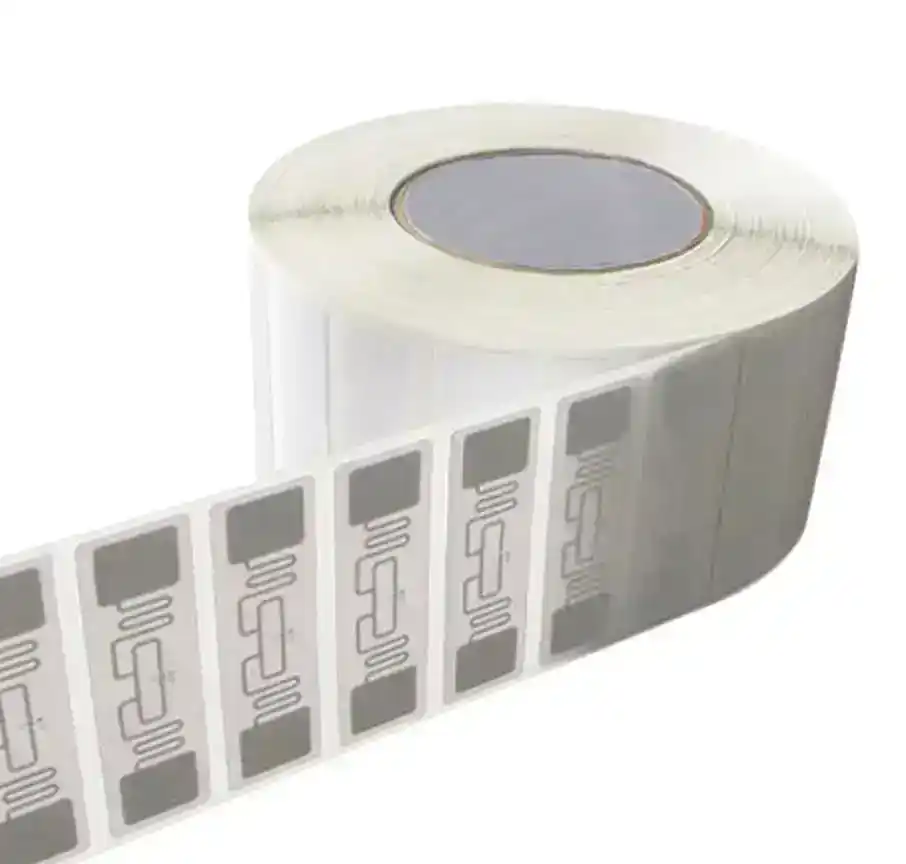
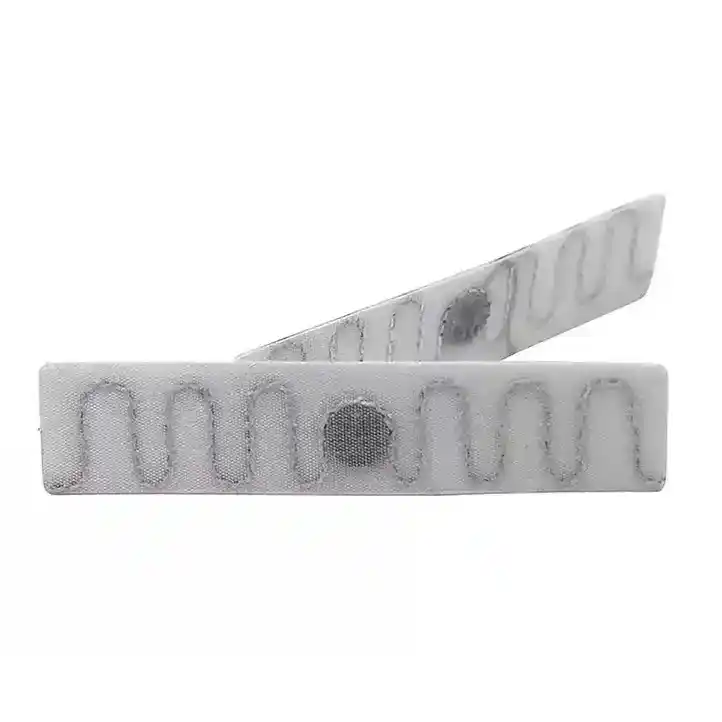
Material selection: PPS RFID laundry tags, textile RFID laundry tags, silicone RFID laundry tags
People love asking “which material is best?” I’ll give the real answer: the best one is the one that survives your line without hurting operations.
Material style
Strengths
Tradeoffs
Good fit when…
PPS (button/token style)
tough shell, handles crush + rough handling
thicker, needs proper attachment method
heavy-duty workwear, high extraction pressure, brutal handling
Textile / fabric tag
flexible, easy to sew into hems
can wear faster if placed badly
hotel linen, garments where comfort and flexibility matters
Silicone encapsulated
soft touch, decent protection
can be bulkier than textile
mixed programs, you need comfort but still want protection
If you run portals and want fast batch reads, UHF textile tags often make ops happy. If you run nasty chemistry and high-force extraction, PPS tends to be more forgiving.
Common deployment scenarios: hotels, healthcare, uniform rental
Hotel linen: speed and batch accuracy
Hotels care about throughput. Linen moves fast. Tags need to survive, sure, but they also need to read reliably in bulk stacks. If reads are flaky, you’ll lose time at receiving and sorting.
Healthcare laundry: disinfection stress and compliance headaches
Healthcare pushes chemistry harder. The buyer pain isn’t just tag death. It’s audit stress: “Can we prove chain-of-use?” RFID helps, but only if tags last long enough to build history.
Uniform rental: shrink control and exception handling
Uniform programs bleed money through shrink. RFID stops the bleeding when it:
reduces mis-sorts,
flags missing returns,
and cuts exception handling.
But if tags fail early, your dataset gets noisy and you’ll chase ghosts. Not fun.
OEM/ODM RFID manufacturing: antenna, chip, printing, encoding
If you’re buying at scale, you don’t just need a tag. You need a supplier who can run a clean pipeline: antenna design, chip selection, converting, printing, encoding, and QC.
CXJ Smart Card leans into that factory-direct model: OEM/ODM customization, fast samples, flexible MOQ, global shipping, and ISO-led quality (ISO 9001/14001 style systems, plus 100% outgoing inspection claims in our positioning). We can do encoding and personalization so tags show up ready for your database, not “blank metal and hope.” It works good for bulk buyers, honestly.
Buyer checklist for heat and chemical resistance (so you don’t get burned later)
Ask this
Because this is where projects fail
What to request
Your wash recipe (temps, dwell times, drying, finishing)
“washable” means nothing without process context
cycle definition + pass/fail metrics
Chemical families used
oxidizers can wreck weak housings
chemical list + cycle exposure time
Attachment method + placement
bad placement kills good tags
sew/heat-seal guidance + sample trials
Performance target
you need stable read rate, not “tag survived”
post-cycle read performance expectations
QC expectations
batch variance becomes ops pain
incoming/outgoing inspection standards
If you want a simple rule: pilot quickly, then scale confidently. Run a real laundry trial with real loads, not a desk test. That’s how you avoid a slow disaster later.