If you manage an apartment building or an office, you already know the pain. Metal keys go missing, PIN codes get shared, and nobody really knows who opened which door at what time.
RFID keyfobs change that daily routine in a quiet way. Doors just start to behave better.
At CXJ Smart Card, a custom RFID manufacturer focused on OEM/ODM cards, tags and wristbands, we see this every day when clients move from old keys to RFID credentials. With in-house production and ISO-led quality, we stay pretty close to real projects, not only theory.
RFID Keyfob Access Control for Modern Buildings
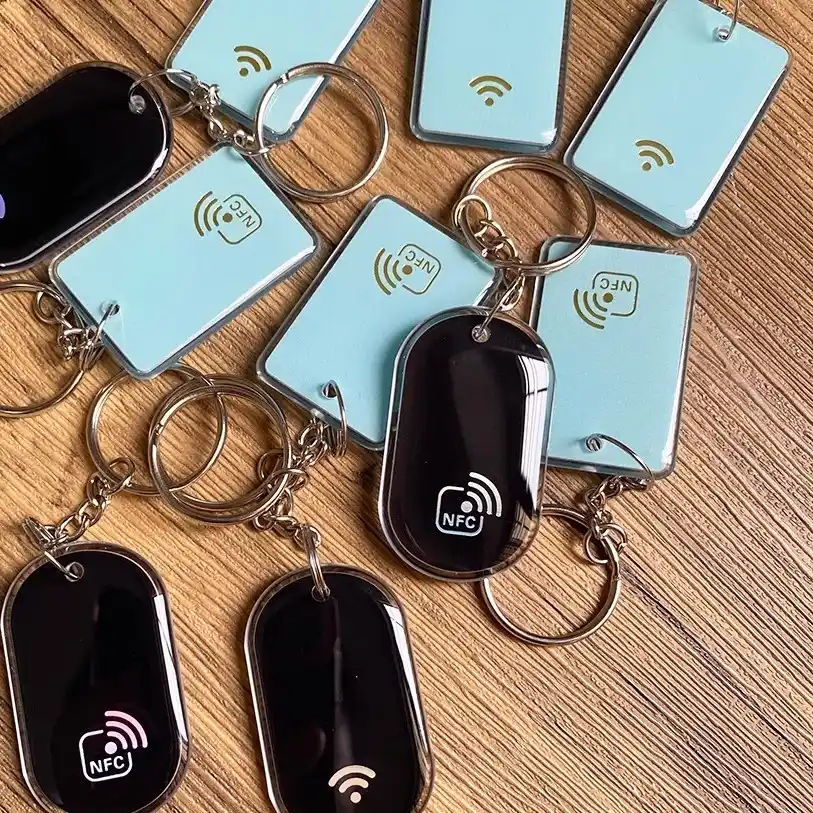
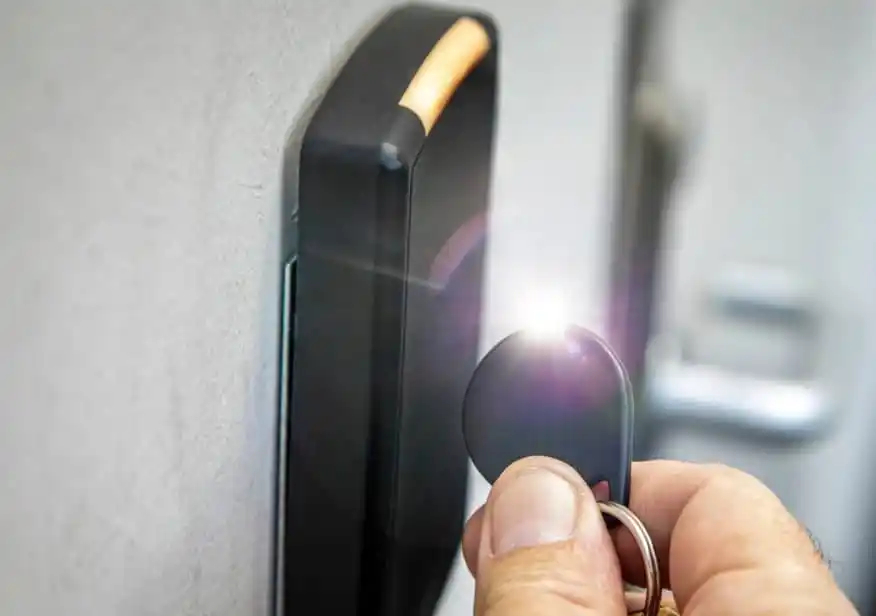
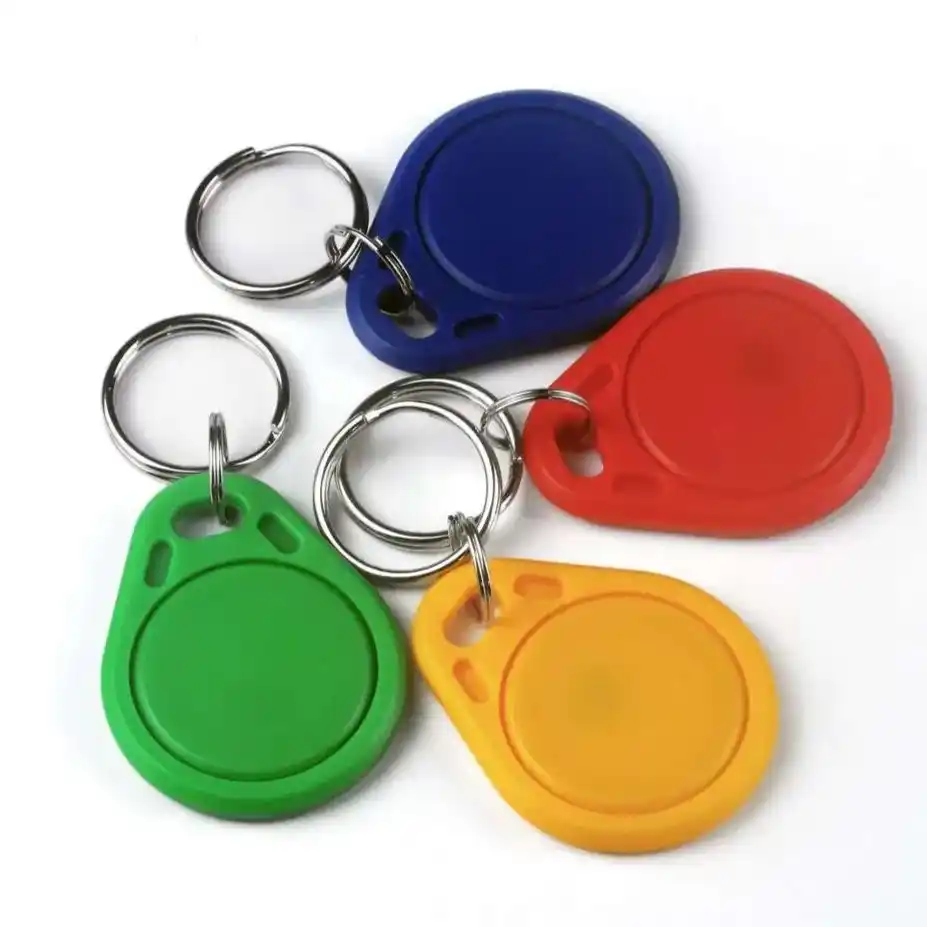
An RFID keyfob (also called RFID key tag or keychain) is a small ABS, leather, or even wood token with an embedded chip. It talks to the reader when you tap or wave it near the door. CXJ’s RFID keyfobs support LF (125 kHz), HF/NFC (13.56 MHz), and UHF options, so they fit legacy proximity systems, NFC projects, and long-range setups.
They are rugged, waterproof enough for daily life, and happy to live on a key ring for years. In practice, they end up used for:
Building and parking access
Hotel “keys”
Staff attendance and time tracking
Membership and locker control in gyms, pools and clubs
Small IoT gadgets that just need a quick ID tap
For tenants and employees the workflow is simple: touch, beep, door opens. No hunting for the right metal key in the dark hallway.
Residential RFID Keyfobs for Safer, Easier Door Entry
Lost RFID Keyfobs and Instant Deactivation
In a residential building the big headache is churn. Tenants move, cleaners change, keys disappear. With a mechanical lock, you either take the risk or you call the locksmith again.
With RFID, each keyfob has a unique ID in the system. When a resident loses it, you do not need to change the cylinder. Instead you:
Open the access control software
Disable that fob ID
Hand out a new one
The door hardware stays, the reader stays, and the building stays secure. This is the basic credential lifecycle: add, update, revoke, without touching the door.
For landlords and building operators, that means less chaos when tenants turn over, fewer emergency visits, and fewer angry calls at 2 a.m. because “someone still has the key”.
Flexible Access Rights for Family, Tenants and Service Staff
RFID also lets you stop handing out “master” keys that open everything. You can give fine-tuned rights instead:
Tenants: lobby + elevator + their own floor or apartment
Cleaner: weekdays, 10:00–16:00, only doors on a specific stack
Parcel room: open for tenants but not for random visitors
Co-living units: shared kitchen and laundry plus private rooms
In access-control language, you are setting up role-based access control (RBAC) and time zones, not just trusting everyone.
Residential projects often mix keyfobs with other credentials too:
Same backend, different “keys”, and a much cleaner access rights matrix.
Office RFID Keyfobs for Staff Access and Time Attendance
Onboarding and Offboarding Without Changing Locks
In offices, the pain point is HR changes. People join, leave, move teams, get promoted, or become vendors for a short time.
With RFID keyfobs:
HR or IT enrolls a new employee and links their fob to their profile
They can open front door, assigned floors, meeting rooms, parking
When they leave, you disable that badge in a few clicks
No re-cutting keys, no chasing people for returns, no silent copies in someone’s pocket. For co-working spaces and multi-tenant towers this is basic hygiene and reduces front-desk drama.
Audit Trails, Compliance and Security Team Visibility
RFID systems log every valid or denied tap. That log is gold for your security and facility team:
You see who opened the server room at 03:15
You can prove that someone was on site for time-and-attendance
You catch weird patterns, like one fob trying many restricted doors
Sometimes the data just helps with daily ops. You see peak entry times and adjust staffing, elevator logic or cleaning schedule. Security teams like fast answers after an incident, and a clean access log gives them that.
In mixed-use buildings you can even use RFID/NFC bracelets for gyms or staff wellness areas and keep fobs for doors, all on the same platform.
Key Benefits of RFID Keyfobs vs Traditional Keys and PIN Codes
Here is a quick comparison you can drop into an internal slide or proposal:
Aspect
Metal Keys
PIN Codes
RFID Keyfobs (Key Tags)
Lost credential handling
Change lock or accept higher risk
Change code for everybody
Disable single fob in software, issue a new one
Access levels
Hard to segment cleanly
Possible but messy to manage
Per-door, per-user, per-time-zone access profiles
Audit trail
None
Limited, depends on device
Door-by-door tap history, easy to search
Day-to-day convenience
Slow, find the right key
Need to remember code
Tap to enter, even with hands full
Scaling to many doors/sites
Many locks and complex key trees
Complex tables of PINs
Centralized controller, easy to add doors or new sites
So you are not just swapping a key shape. You are moving to a small access-control platform that can actually scale with the building.
Custom OEM RFID Keyfobs and Connected Credentials
Real projects rarely use “stock only”. A hotel wants nice metal-look keychains with a logo. A residential tower wants cost-efficient ABS fobs in bulk. An office client wants encrypted HF chips, UID mapping, and pre-encoding before shipment.
CXJ Smart Card designs and produces RFID keyfobs and other credentials specifically for this OEM/ODM style:
Chips & frequencies: LF for legacy readers, HF/NFC for smart access, UHF for long-range gates
Materials & shapes: ABS shells, leather, wood, custom forms to match property branding
Printing & branding: CMYK or special finishes so the fob looks like part of your building, not a random gadget
Data & encoding: UID writing, sector keys, NDEF, EPC, ERP mapping, with test reports so devices arrive plug-and-play
Because CXJ runs antennas, inlays, lamination, printing and die-cutting in its own factory, you are not juggling many suppliers. You pilot quickly, then scale confidently from sample to volume. MOQ stays flexible instead of scary.
And if your door ecosystem needs more than fobs, you can plug in:
Anti-metal ABS tags for doors or gates on steel structures
This way your access credentials become part of a wider RFID strategy across logistics, retail, laundry, animal ID and more, not a lonely island.
Choosing RFID Keyfobs for Residential and Office Access Control Projects
When you plan your next upgrade or new site, you can think in three simple layers:
User experience
Will residents and staff understand “tap to enter” on day one?
Do you need multiple credential types (fob + card + wristband) for different user groups?
Security and operations
Do you need strong encryption on HF credentials?
How strict do your audit trails and compliance checks need to be?
Who owns add / change / remove in the credential lifecycle – IT, security or property management?
Supply and scalability
Can your supplier support fast samples, low but realistic MOQ, and global shipping?
Do you get free samples and test reports, so your team can check read range and materials before rollout?
Is there one OEM/ODM partner from antenna to finished label, or many small vendors that may not align?
CXJ Smart Card positions itself exactly here: Custom RFID manufacturer | OEM/ODM Cards, Tags & Wristbands, with ISO 9001/14001, RoHS/REACH-compliant materials and 100% outgoing inspection. You can start small, fix the real access pain points, and then extend the same technology to the rest of your portfolio.
If your building is still living on metal keys or shared PINs, RFID keyfobs are probably the most friendly step into modern access control. Start with one door, one building or one tenant group. The doors do not care what you used yesterday. They only care what you tap today.