When people start a new project, they often throw NFC and RFID in the same bucket. But pretty soon the real question comes out:
Do we want phone tap interaction, or do we need long-range bulk reading?
If you mix these up, the roll-out hurts: poor read rate, unhappy users, too many support ticket. Let’s walk through the difference in a more relaxed, real-world way and tie it back to what CXJ Smart Card can actually ship for you.
NFC vs RFID Basics for Mobile Interaction and Bulk Reading
RFID (Radio Frequency Identification) is the big family. It covers low frequency, high frequency and UHF systems. A reader sends RF energy, a tag replies with an ID and maybe some data. In UHF you can read many tags in one shot.
NFC (Near Field Communication) sits inside this family. It works at 13.56 MHz (HF), at a few centimeters distance, and is built for two-way talk between phone, card or tag and a reader.
So in short:
NFC = very short range, one-to-one, great for user interaction
UHF RFID = long range, many-to-one, great for inventory and asset tracking
CXJ Smart Card sits on both sides: factory-direct RFID cards, NFC tags, keyfobs, NFC/RFID bracelets, sticker labels, wash-care labels, inlays, anti-metal tags and animal glass tube tags, all with OEM/ODM service from antenna design to printing and encoding.
NFC for Mobile Interaction with Smartphones
NFC Payments and Access Control Use Cases
NFC is born for things that feel like “tap and go”.
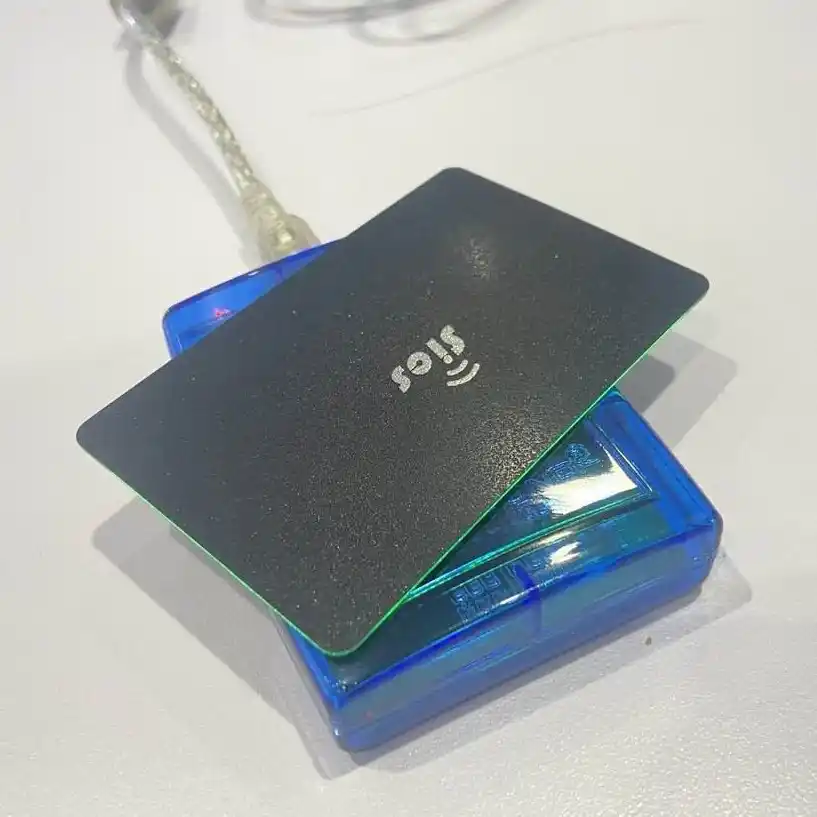
Because the read distance is tiny, basically “touch the reader with your phone or card”, users clearly know when a transaction happens. That’s why you see NFC everywhere in:
Mobile payment and bank cards
Office and hotel access control
Campus and membership cards
City transport and ticketing
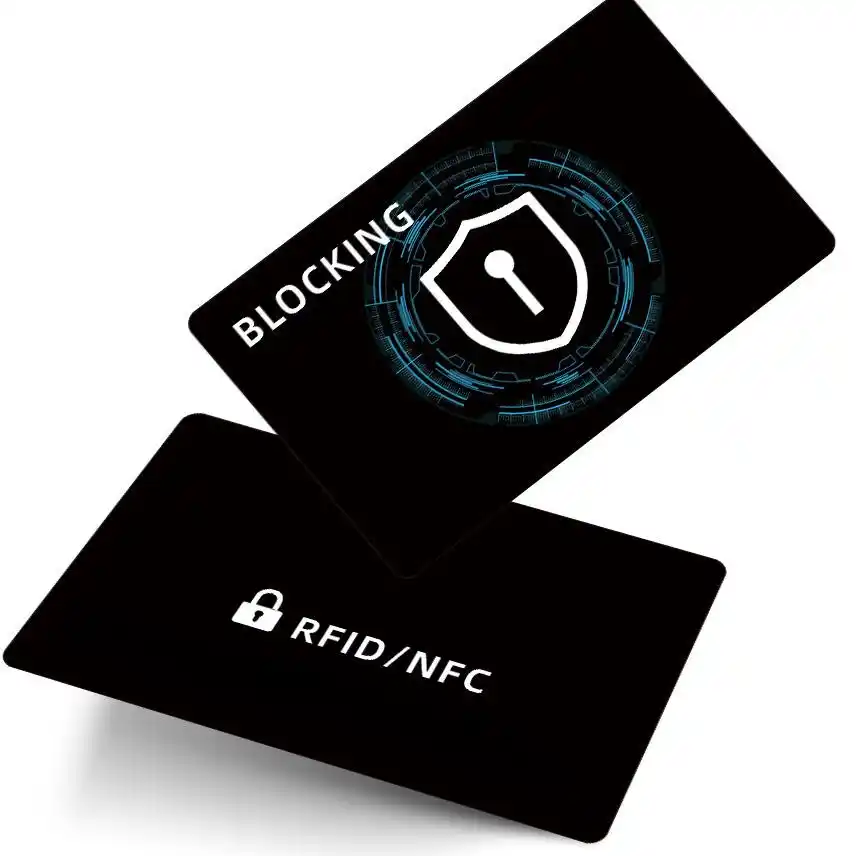
For these flows you want secure chips, stable read, nice printing, and clean personalization. This is where products like CXJ’s NFC cards and access control cards come in: you choose chip type, artwork, numbering, and we handle lamination, encoding and full inspection.
If you need higher security like diversified keys or back-end mutual auth, DESFire EV2 cards give you that extra layer without changing the front-end user behavior.
Sometimes customer just say “I dont care about protocol, I just need the badge works fast at the gate”. That’s fine; we map chip and antenna to your reader brand so on-site IT doesn’t fight with timeouts and weak read.
NFC Tags for Brand Engagement and Anti-Counterfeit
NFC is also strong when your product itself becomes a smart touchpoint.
Think about:
A user taps the wine bottle label to check authenticity
A sneaker tag opens a limited drop page
A spa or gym membership band ties to a loyalty wallet
A poster tap jumps straight into a campaign landing page
Here you’re not just selling hardware; you’re buying engagement and anti-fake capability.
For this kind of work, you mix and match:
Printable or clear stickers and on-metal tags, from CXJ’s NFC products range
Very small form factor items from the custom micro NFC line when you need to hide tags in logos, caps or accessories
Special tamper tags if you want “open once and chip status changes”
Marketing teams like that they can start with a small pilot — maybe a few hundred or a few thousand from the wholesale NFC tags catalog — run a POC with their agency, then ramp up later without re-designing the whole tag stack.
NFC Wristbands and Event Solutions
Events, resorts and leisure venues almost always prefer NFC on the wrist:
Festivals and concerts: entry control + cashless spend
Resorts and waterparks: guest ID + locker access + F&B payment
Gyms and clubs: member check-in and locker room
In those cases, people don’t want to pull out a wallet or phone every time. One tap with a wristband is enough.
You can look at CXJ’s NFC wristbands: Tyvek, fabric, silicone, disposable or reusable. Printing, UID list, chip mix, all can be tuned to your platform. If your ticketing vendor speaks about “read reliability on wet skin” or “throughput at entry gate”, we know what they mean, we see that everyday.
UHF RFID for Long-Range Bulk Reading
RFID Inventory and Asset Tracking in Logistics and Retail
When the requirement sounds like:
“We want to read a whole pallet while it goes through a dock door”
“We need faster cycle count in the store backroom”
“We care about real-time asset visibility on tools and IT gear”
…then you’re in UHF RFID territory, not NFC.
With UHF you can:
Read dozens or even hundreds of tags in a single scan
Reach several meters with fixed readers or handhelds
Work without direct line-of-sight, so boxes can stay closed
Typical implementations:
UHF labels on cartons and pallets
Hard tags or anti-metal tags on assets and racks
Portal readers at warehouse doors, line-side or yard gates
CXJ ships many of these as custom builds: size, epoxy, ABS, PPS, anti-metal foam, whatever the real-world environment needs. We’re used to folks asking “our shelves are all metal, will this tag survive there?” — that’s a daily question, not a weird one.
RFID Laundry Labels and Industrial Tags
Another classic long-range use case is laundry and textile management:
Hotels, hospitals, rental laundries
Workwear and uniform providers
Table linen, mats, mops and more
You stitch or heat-seal UHF wash-care labels into each piece. Then big tunnel readers and conveyors pick up hundreds of items per minute. No one stands with a scanner, the system just runs.
Similar logic applies to:
Animal glass tube tags for livestock or pets
Patrol check-points
Tool cribs and MRO inventory
All of these are still RFID, just different package and frequency than a door card. From CXJ side, you still get one-stop OEM: chip, antenna, encapsulation, encoding, test reports and shipping in bulk.
NFC vs RFID Comparison Table for Project Planning
Here’s a compact table you can share inside your team.
Factor
NFC for Mobile Interaction
UHF RFID for Long-Range Bulk Reading
Typical distance
A few centimeters, basically “tap”.
Several meters with good reader and antenna.
Interaction style
One-to-one, user must tap with phone or card.
One-to-many, reader captures many tags automatically.
Flexible MOQ and fast samples: good for POC and pilot runs before you lock full roll-out
Encoding and personalization: UID lists, EPC, keys, printing, laser, packaging, all aligned to your ERP or access system
ISO-based quality system and full inspection so each batch behaves stable in the field
If you run a mobile-first project, you can standardize on NFC cards, keyfobs, stickers and wristbands. If you need long-range coverage, you spec UHF labels and hard tags. If you need both, you still keep one vendor and one engineering contact instead of juggling three or four factories.
Sometimes customers tell us, “our IT guys only talk about app and backend API, they dont care about tag physics”. No problem. We can help you translate use case to tag type, so they dont have to be RF experts over night.
Conclusion: Picking NFC or RFID for Your Use Case
To wrap up in simple words:
If a person with a phone or card is part of the interaction, and you care about a clean “tap” moment, pick NFC.
If you need to see many items at once, without line of sight, and your focus is inventory accuracy and asset visibility, pick UHF RFID.
In many real deployments, you’ll combine both: NFC on the user side, RFID in the back-end.
Once you know which side your core requirement sits, the hardware choices become much easier. And with a factory like CXJ Smart Card behind you, from NFC cards to laundry labels, you can pilot quickly and then scale without changing the whole hardware stack again.