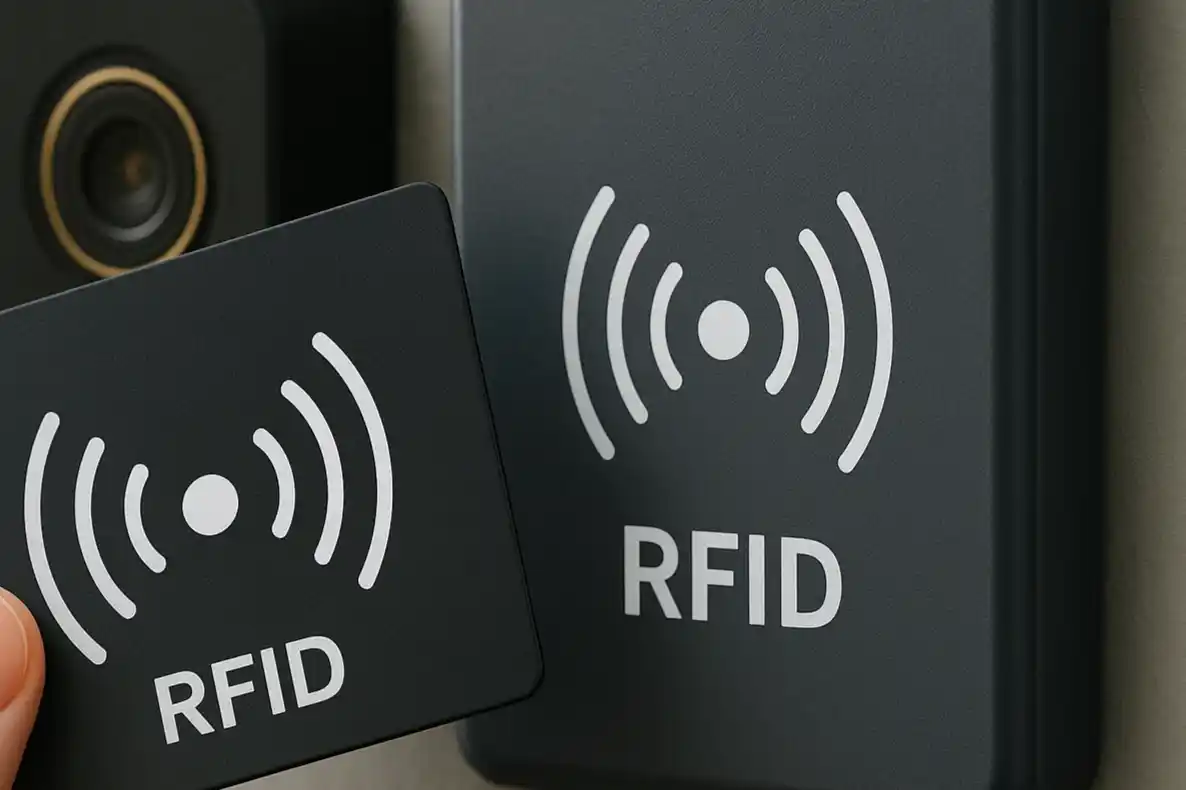
You hear “RFID” a lot in projects now. Then someone asks: “Are we going with LF, HF or UHF?” and the room gets quiet.
Let’s break it down in simple words, with real business cases, and show where a custom factory like CXJ Smart Card actually helps you land the project, not only talk about it.
RFID Technology Overview and Frequency Bands
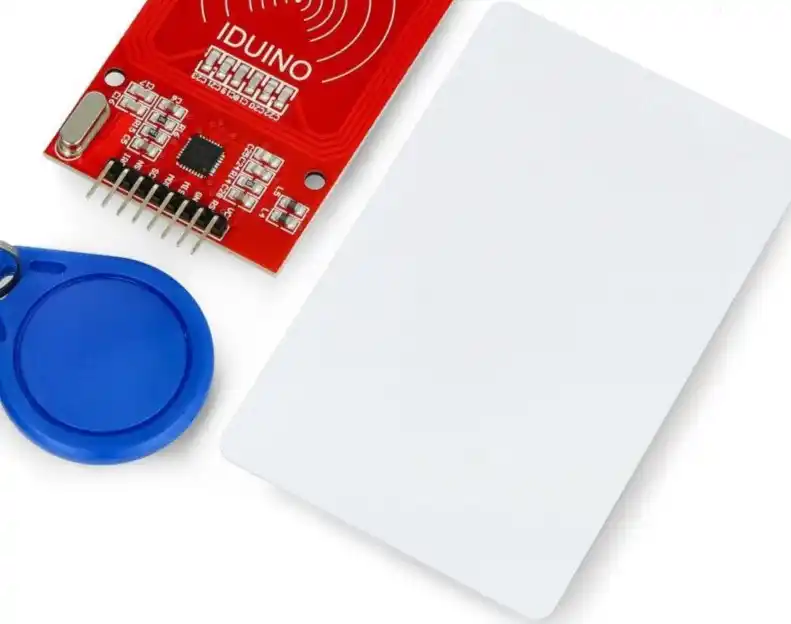
RFID is just three main parts working together:
A tag – card, keyfob, label, wristband, laundry chip, glass tube, etc.
A reader or gate.
Your software – WMS, ERP, POS, access control, laundry system, whatever you run.
The key detail is the frequency band. In most business systems you’ll meet three:
LF RFID (Low Frequency): around 125–134 kHz
HF RFID / NFC (High Frequency): 13.56 MHz
UHF RFID (Ultra High Frequency): roughly 860–960 MHz
Different bands mean different read distance, speed, and behavior near metal and water. That’s why your laundry plant, fashion store and pet clinic don’t all use the same tag family.
On the hardware side, CXJ produces all three families as cards, labels, inlays and special tags, so you don’t get locked into one band too early.
LF RFID 125–134 kHz for Animal ID and Close-Range Control
LF RFID works in the 125–134 kHz range. The read range is short, normally contact to maybe 10 cm. That sounds small, but for some jobs it’s perfect.
You use LF when:
You want one-by-one confirmation, not long-distance scanning.
The tag stays inside a body or very close to metal and liquid.
You care more about stable reads than high data rate.
Typical LF usage:
Pet and livestock ID – glass tube transponders injected under the skin.
Certain LF laundry and token products under RFID Laundry Tags for rental textile.
If the environment is “wet, hot, full of metal stuff”, LF often gives less headache in real life.
HF RFID 13.56 MHz for Smart Cards and Access Control
HF RFID (including NFC) runs at 13.56 MHz. Read range is usually a few centimeters up to maybe half a meter with the right antenna. It’s the classic tap card / tap phone experience.
You choose HF/NFC when you need:
A clear user gesture – tap to enter, tap to pay, tap to check-in.
Strong chip security features (keys, sectors, advanced chips like DESFire).
Global standards like ISO 14443 and ISO 15693.
Practical use:
Office and hotel access badges.
Transport cards, campus cards, event passes.
Payment and loyalty cards.
NFC marketing tags that people tap with a phone.
On cxjsmartcard.com, HF/NFC appears in several lines:
Contactless smart cards in RFID Cards for access, payment and loyalty.
NFC labels and coins in NFC Tags for posters, smart packaging and brand protection.
Event and fitness center wristbands in RFID NFC Bracelets for hands-free entry and cashless spending.
If your pain today is “plastic card supplier can’t encode right, queue at the gate is always long”, HF/NFC is normally the band you look at first.
UHF RFID 860–960 MHz for Logistics, Warehouse and Retail
UHF RFID works around 860–960 MHz. Passive UHF tags can often be read from 1–10 meters with decent antennas. That’s where the magic for logistics and stock-take really comes from.
You pick UHF when you need:
Bulk reading – hundreds of tags in seconds.
Portal or tunnel reading at dock doors and conveyors.
Fast cycle counting without item-by-item scanning.
UHF is more sensitive to metal and water, so tag design and install really matters. But when you get it right, you can cut manual labor a lot.
UHF RFID sticker labels and wash care labels
Some classic UHF business stories:
Warehouse and logistics – wet/dry inlays and carton labels from RFID Sticker Labels used on pallets, boxes and totes.
Fashion and retail – UHF wash care labels sewn into garments, as in RFID Wash Care Labels, so staff can do fast inventory and brand owners can fight fake products.
Industrial laundry – UHF PPS and textile tags from RFID Laundry Tags surviving washing, drying and ironing lines.
Metal assets – Anti Metal ABS UHF RFID Tags for tools, racks, IT devices and containers where normal labels just die too fast.
If your KPI sounds like “count the store in 10 minutes” or “know which pallet left which gate”, UHF is usually the only realistic band.
LF vs HF vs UHF RFID Frequency Comparison Table
Quick cheat sheet you can show to your team or client:
Frequency band
Typical frequency range
Normal passive read range
Metal & water behavior
Typical business usage
Example CXJ products
LF RFID
125–134 kHz
Contact to ~10 cm
Very tolerant near liquid and animals, OK around metal
Heavy metal, steam, water spray → choose tags built for that, like laundry tags or anti-metal designs.
Clean store or DC → standard label constructions are usually enough.
What workflow do you want?
Clear human action – “tap here to enter” → HF/NFC smart card or wristband.
Hands-off bulk read – “drive through the gate, system auto logs it” → UHF.
Point-blank proof – “scan this exact asset before repair” → short-range LF or HF.
Sometimes the best answer is a mix. For example, LF glass tubes for animals, HF staff badges, UHF labels for feed bags. It’s not pretty on a slide, but on the ground it works.
OEM/ODM Custom RFID Cards, Tags and Wristbands for Business
Even after you pick LF, HF or UHF, a lot of work is still there: antenna size, chip type, material, printing, encoding, packing. If any of these goes wrong, the whole system feels broken.
Here is where CXJ Smart Card quietly adds value:
Custom design from inlay to finished product – antennas and chips for RFID NFC Inlay, then converted into RFID Cards, labels, wristbands and other formats in one factory.
Own production lines for lamination, printing, punching and injection, so pilot runs and mass orders can stay consistent.
ISO 9001 / 14001 quality system, RoHS/REACH materials and 100% outgoing inspection keep bad tags out of your project.
Fast samples, flexible MOQ and global shipping let you pilot quickly, tweak read range and printing, then scale when the field test looks good.
So when the next meeting starts with “we need RFID, which frequency we use?”, you can answer calmly:
“Let’s look at our real business flow first, then pick LF, HF or UHF and ask the factory to tune tags for that.”
Not every sentence here is perfect English, but the idea is clear, and that’s exactly what makes RFID rollouts actually deliver value instead of just another buzzword slide.